












The Effectiveness of Solution-Focused Therapy on Loneliness and Self-Care Behaviors among Older Adults
Objective: This study aimed to determine the effectiveness of solution-focused therapy in reducing loneliness and improving self-care behaviors among older beneficiaries of the Imam Khomeini Relief Committee in Tabriz.
Methods and Materials: This applied study employed a quasi-experimental pretest–posttest design with a control group. The statistical population consisted of all older beneficiaries covered by the Imam Khomeini Relief Committee in Tabriz during 2024–2025. Sixty eligible participants were selected through purposive sampling and randomly assigned to an experimental group and a control group, with 30 participants in each group. The experimental group received eight weekly two-hour group sessions of solution-focused therapy, whereas the control group received no intervention. Data were collected using the Social and Emotional Loneliness Scale for Adults developed by DiTommaso et al. and the Standardized Elderly Self-Care Questionnaire developed by Younesi Boroujeni et al. The data were analyzed using multivariate analysis of covariance in SPSS version 21.
Findings: After controlling for pretest scores, solution-focused therapy produced a significant multivariate effect on the dimensions of loneliness (F=17.23, p<0.001, ηp²=0.590). Significant intervention effects were observed for social loneliness (F=44.37, p<0.001, ηp²=0.539) and family loneliness (F=7.26, p=0.010, ηp²=0.161), whereas the effect on emotional loneliness was not statistically significant (F=3.91, p=0.055). A significant multivariate effect was also found for self-care behaviors (F=14.162, p<0.001, ηp²=0.618). Solution-focused therapy significantly improved spiritual self-care (F=11.97, p=0.001), social self-care (F=25.15, p<0.001), physical self-care (F=12.99, p=0.001), and self-care during illness (F=20.16, p<0.001).
Conclusion: By emphasizing personal strengths, available resources, positive exceptions, and attainable goals, solution-focused therapy can reduce the social and family dimensions of loneliness and improve all dimensions of self-care among older adults. Its application as a brief and practical intervention in counseling, healthcare, and social support centers for older adults is therefore recommended.
Analyzing the Characteristics of Resilient Families in Islamic Teachings (Hadiths and Narrations) for Presenting Educational Implications
Objective: This study aimed to explore the characteristics of resilient families in Islamic teachings (Hadiths and narrations) and to identify their educational implications.
Methods and Materials: This qualitative study was conducted using qualitative content analysis with a deductive categorization approach. The research corpus consisted of Islamic texts, Hadiths, and narrations related to family resilience, selected through purposive sampling. Data were collected through systematic note-taking from printed and digital sources. Relevant paragraphs were identified, coded, and analyzed as the unit of analysis. Similar codes were grouped into conceptual categories, and overarching themes were extracted through iterative analysis until conceptual saturation was achieved. Library-based data collection and document analysis constituted the primary methodological framework.
Findings: Content analysis yielded 220 conceptual codes organized into 11 core categories. These categories included patience and perseverance, respect for differences and diversity, acceptance of individual and collective responsibility, trust in God and reliance on Him, proper life management, a positive approach toward the future, spiritual connection with God, thinking and consultation in decision-making, maintenance of mental and physical health, attention to financial and economic principles, and strengthening solidarity and cooperation. Among these categories, a positive approach toward the future demonstrated the highest frequency (35 occurrences), whereas respect for differences and diversity showed the lowest frequency (9 occurrences). Proper life management, spirituality, and reflective consultation emerged as particularly prominent dimensions of family resilience in Islamic teachings.
Conclusion: The findings indicate that resilient families in Islamic teachings are founded upon a combination of moral, spiritual, cognitive, and behavioral values that facilitate effective adaptation to adversity and life challenges. Components such as patience, trust in God, optimism, solidarity, responsibility, and sound life management contribute significantly to family stability and the development of resilient future generations. Integrating these principles into educational and family-training programs may strengthen resilience and well-being in contemporary families.
Designing a Good Marital Conduct Protocol Based on Islamic Sources
Objective: The present study aimed to design a good marital conduct protocol based on Islamic sources with an emphasis on enhancing marital satisfaction, happiness, and family resilience.
Methods and Materials: This study was conducted using a qualitative design based on thematic analysis. Data were collected through an extensive review of Islamic sources including the Holy Qur’an, narrations, Islamic ethical texts, and scientific literature related to family functioning, marital satisfaction, resilience, and psychological well-being. During the analytical process, concepts associated with spouses’ interactions, emotional support, empathy, patience, forgiveness, responsibility, constructive dialogue, and companionship were extracted and coded. Initial themes were then organized into broader axial categories, and finally the conceptual structure of the good marital conduct protocol was developed. To improve credibility, the extracted themes and categories were reviewed and evaluated by experts in family counseling and Islamic studies.
Findings: The findings demonstrated that good marital conduct in Islamic teachings is a multidimensional construct consisting of emotional, communicative, ethical, and spiritual dimensions. The most significant extracted themes included compassion, empathy, respectful dialogue, emotional support, companionship, forgiveness, patience, ethical commitment, responsibility, and spirituality. The results further indicated that concepts related to family resilience and psychological adaptation occupy a central position within Islamic teachings and may function as protective factors against marital conflict and emotional distress. Data analysis also revealed that integrating spiritual values with communication and relational skills within a coherent protocol provides considerable potential for enhancing couples’ psychological well-being and relational quality.
Conclusion: Based on the findings, the good marital conduct protocol derived from Islamic sources can serve as an indigenous and culturally grounded framework for strengthening marital relationships, increasing happiness, and enhancing family resilience. By integrating ethical, emotional, and spiritual dimensions, the protocol offers significant potential for application in family education and counseling interventions.
Keywords: Good marital conduct, Islamic sources, marital satisfaction, family resilience, marital happiness, spirituality, Islamic family
Effectiveness of an Islamic Logotherapy Training Package Based on Ayatollah Safaei Haeri’s Approach on Mental Health, Self-Worth, and Moral Development among Female High School Students
Objective: The present study aimed to investigate the effectiveness of an Islamic logotherapy training package based on Ayatollah Ali Safaei Haeri’s perspective on mental health, self-worth, and moral development among female secondary school students in Tehran.
Methods and Materials: This study employed a quasi-experimental design with pre-test, post-test, and control group. The statistical population included all female secondary school students in Tehran during the 2025–2026 academic year. Thirty participants were selected through purposive sampling and randomly assigned into experimental and control groups (15 participants in each group). The experimental group received an Islamic logotherapy training program based on Ayatollah Safaei Haeri’s approach in nine 90-minute sessions, while the control group received no intervention. Research instruments included the SF-36 Mental Health Questionnaire, the Self-Worth Questionnaire developed by Doosti and Hosseini-Nia, and Lotfabadi’s Moral Development Questionnaire. Data were analyzed using descriptive statistics and univariate and multivariate analyses of covariance in SPSS-27.
Findings: The findings of multivariate covariance analysis demonstrated that the Islamic logotherapy intervention had a significant effect on mental health, self-worth, and moral development among students (P<0.05). Post-test mean scores of the experimental group were significantly higher than those of the control group across all variables. The intervention effect sizes were reported as 31% for self-worth, 18% for moral development, and 15% for mental health. Furthermore, univariate covariance analyses confirmed that the intervention significantly improved moral development, enhanced feelings of self-worth, and promoted mental health in the experimental group compared to the control group.
Conclusion: The results suggest that the Islamic logotherapy training package based on Ayatollah Safaei Haeri’s ideas is an effective culturally grounded intervention for improving adolescents’ mental health, self-worth, and moral development. Integrating this spiritually oriented approach into school counseling and educational programs may serve as a preventive and developmental strategy to strengthen students’ psychological well-being, moral responsibility, and existential meaning.
Psychometric Properties of the Psychological Emptiness Scale in an Iranian Population
Objective: This study aimed to examine the psychometric properties of the Persian version of the Psychological Emptiness Scale among Iranian university students.
Methods and Materials: This study employed a descriptive survey design within a psychometric validation framework. The statistical population consisted of university students aged 18 to 24 years in Tehran during the 2024–2025 academic year. A total of 400 students were selected through convenience sampling. Data were collected using the Persian version of the Psychological Emptiness Scale, the Beck Scale for Suicide Ideation, and the Satisfaction with Life Scale. Construct validity was assessed using confirmatory factor analysis, while convergent and divergent validity were examined through Pearson correlation coefficients between psychological emptiness, suicidal ideation, and life satisfaction. Internal consistency was evaluated using Cronbach’s alpha coefficient, and temporal stability was assessed through the test–retest method. Data were analyzed using SPSS version 26 and AMOS.
Findings: The results of confirmatory factor analysis supported the two-factor structure of the scale, consisting of Emotional Emptiness and Existential Emptiness. The model demonstrated an acceptable fit to the data, with fit indices of CFI=0.94, TLI=0.92, RMSEA=0.048, and SRMR=0.061. Cronbach’s alpha coefficients were 0.88 for the total scale, 0.81 for Emotional Emptiness, and 0.84 for Existential Emptiness, indicating satisfactory internal consistency. In addition, psychological emptiness showed a significant positive correlation with suicidal ideation (r=0.61, p<0.01) and a significant negative correlation with life satisfaction (r=-0.52, p<0.05), supporting the convergent and divergent validity of the instrument.
Conclusion: The findings indicated that the Persian version of the Psychological Emptiness Scale has acceptable psychometric properties in the Iranian student population. The scale demonstrated adequate construct validity, convergent and divergent validity, internal consistency, and temporal stability. Therefore, it can be used as a valid and reliable instrument for assessing psychological emptiness in psychological research, early screening, and clinical intervention planning within the Iranian context.
The Effectiveness of Process-Based Therapy on Worry, Intolerance of Uncertainty, and Cognitive Flexibility in Individuals with Generalized Anxiety
Objective: This study aimed to determine the effectiveness of process-based therapy in reducing worry and intolerance of uncertainty and increasing cognitive flexibility among individuals with generalized anxiety.
Methods and Materials: The present study employed a quasi-experimental pretest–posttest design with a control group. The statistical population consisted of adults with clinical symptoms of generalized anxiety. Forty participants were selected through convenience sampling and assigned to an experimental group and a control group, with 20 participants in each group. The experimental group received process-based therapy in ten weekly 90-minute sessions, whereas the control group received no psychological intervention during the study period. Data were collected using the Penn State Worry Questionnaire, the Intolerance of Uncertainty Scale, and the Cognitive Flexibility Inventory. The collected data were analyzed using multivariate and univariate analysis of covariance in SPSS-27.
Findings: The results of multivariate analysis of covariance showed that, after controlling for pretest scores, there was a significant difference between the experimental and control groups in the combined dependent variables. Wilks’ lambda was 0.571, F was 8.27, and the significance level was 0.001. The effect size was 0.429, indicating that 42.9% of the variance in the combined research variables was explained by the intervention. The results of univariate analysis of covariance also indicated that process-based therapy had a significant effect on reducing intolerance of uncertainty, F=16.09, p=0.001, reducing worry, F=25.00, p=0.001, and increasing cognitive flexibility, F=4.36, p=0.044.
Conclusion: The findings suggest that process-based therapy, by targeting the underlying and maintaining processes of generalized anxiety, including excessive worry, need for certainty, safety-seeking behaviors, control strategies, and cognitive inflexibility, can be considered an effective intervention for reducing worry and intolerance of uncertainty and improving cognitive flexibility in individuals with generalized anxiety.
The Effectiveness of Group Clinical Creativity Therapy on Improving Anxiety, Depression, and Resilience in Women with Substance Use Disorders
Objective: The present study aimed to investigate the effectiveness of group clinical creativity therapy in reducing anxiety and depression and enhancing resilience among women with substance use disorders.
Methods and Materials: This study employed a quasi-experimental pretest–posttest design with a control group and a one-month follow-up assessment. The statistical population consisted of women with substance use disorders in Qazvin, Iran, during 2022–2023. Thirty participants were selected through purposive sampling and randomly assigned to either an experimental group (n = 15) or a control group (n = 15). The experimental group received ten 120-minute sessions of group clinical creativity therapy, whereas the control group received no intervention. Data were collected using the Beck Anxiety Inventory (BAI), Beck Depression Inventory-II (BDI-II), and Connor–Davidson Resilience Scale (CD-RISC). Data analysis was conducted using univariate analysis of covariance (ANCOVA).
Findings: ANCOVA results demonstrated significant differences between the experimental and control groups in anxiety at posttest (F = 29.149, p < .001) and follow-up (F = 24.957, p < .001). Significant reductions were also observed in depression at posttest (F = 11.382, p = .002) and follow-up (F = 8.394, p = .008). However, no significant group differences were found for resilience at posttest (F = 1.002, p = .326) or follow-up (F = 0.107, p = .746). These findings indicate that the intervention effectively reduced anxiety and depression, whereas its effect on resilience was not statistically significant.
Conclusion: Group clinical creativity therapy appears to be an effective psychological intervention for reducing anxiety and depression among women with substance use disorders, with benefits maintained at least one month after treatment completion. Nevertheless, the intervention did not significantly improve resilience. The findings support the integration of creativity-based therapeutic approaches into substance abuse treatment programs while suggesting the need for more intensive or specialized interventions to strengthen resilience outcomes.
Structural Explanation of Health Anxiety Based on Childhood Trauma: The Mediating Role of Anxiety Sensitivity and Cognitive Avoidance in Women Attending Healthcare Centers
Objective: This study aimed to structurally explain health anxiety based on childhood trauma by examining the mediating roles of anxiety sensitivity and cognitive avoidance in women attending healthcare centers.
Methods and Materials: This descriptive-correlational study was conducted using structural equation modeling. The statistical population included women aged 18 to 50 years who attended healthcare centers in districts 1 to 3 of Tehran during winter 2025–2026. A total of 400 participants were selected through convenience sampling. Data were collected using the short form of the Childhood Trauma Questionnaire, the Anxiety Sensitivity Index, the Cognitive Avoidance Questionnaire, and the Health Anxiety Inventory. Data analysis was performed using SPSS version 28 and Amos version 24. Pearson correlation coefficients, structural equation modeling, and bootstrap analysis were used to examine direct and indirect effects.
Findings: The results indicated that the proposed model had an acceptable fit to the data, with fit indices supporting the adequacy of the structural model (RMSEA=0.044, CFI=0.932, SRMR=0.049, χ²/df=1.88). Childhood trauma had a positive and significant direct effect on health anxiety (β=0.317, p<0.001). Anxiety sensitivity (β=0.231, p<0.001) and cognitive avoidance (β=0.218, p<0.001) also showed positive and significant direct effects on health anxiety. In addition, childhood trauma had positive and significant direct effects on anxiety sensitivity (β=0.175, p<0.001) and cognitive avoidance (β=0.121, p<0.001). Bootstrap results further demonstrated that anxiety sensitivity (β=0.040, p<0.001) and cognitive avoidance (β=0.026, p<0.001) significantly mediated the relationship between childhood trauma and health anxiety. The total indirect effect was also significant (β=0.066, p<0.001), indicating partial mediation.
Conclusion: The findings suggest that childhood traumatic experiences contribute to health anxiety both directly and indirectly through increased anxiety sensitivity and cognitive avoidance. Therefore, psychological interventions targeting maladaptive interpretations of bodily sensations and cognitive avoidance strategies may help prevent and reduce health anxiety among women with a history of childhood trauma.
About the Journal
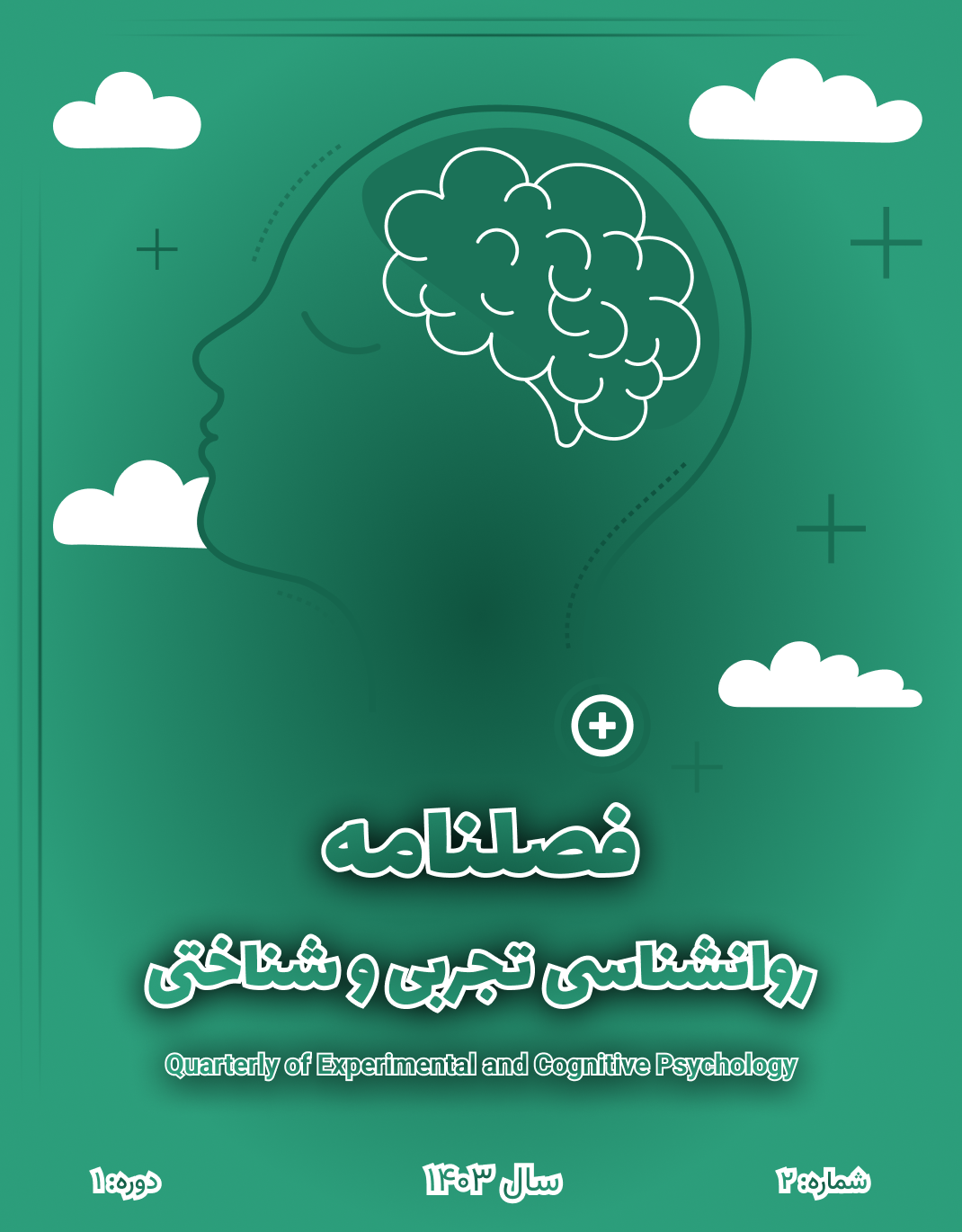
The Quarterly of Experimental and Cognitive Psychology is a peer-reviewed academic journal dedicated to the publication of high-quality research in the fields of experimental and cognitive psychology. Established to advance the understanding of human behavior, cognition, and perception, the journal serves as a global platform for researchers, academicians, and practitioners to disseminate original findings and theoretical contributions that shape the future of psychology.
This journal prides itself on its rigorous editorial standards and commitment to fostering scientific discourse. It accepts submissions across a wide range of topics, including but not limited to cognitive neuroscience, behavioral studies, experimental methodologies, memory, attention, decision-making, perception, problem-solving, and language processing.
Published quarterly, the journal ensures timely dissemination of the latest research, offering both empirical and theoretical articles, comprehensive reviews, and methodological advancements. By maintaining an open access policy, Quarterly of Experimental and Cognitive Psychology guarantees unrestricted access to its contents, ensuring that researchers, educators, and the broader public can benefit from its publications without financial or institutional barriers.